LinkedIn, X, or Email First? How to Choose the Right Channel in AI Outbound
Most teams do not have a multi-channel problem. They have a channel-choice problem.
They know they should not rely on one channel forever, but they still launch the same sequence for everyone: send the email, maybe follow with LinkedIn, maybe add X later, and hope the extra touches create relevance.
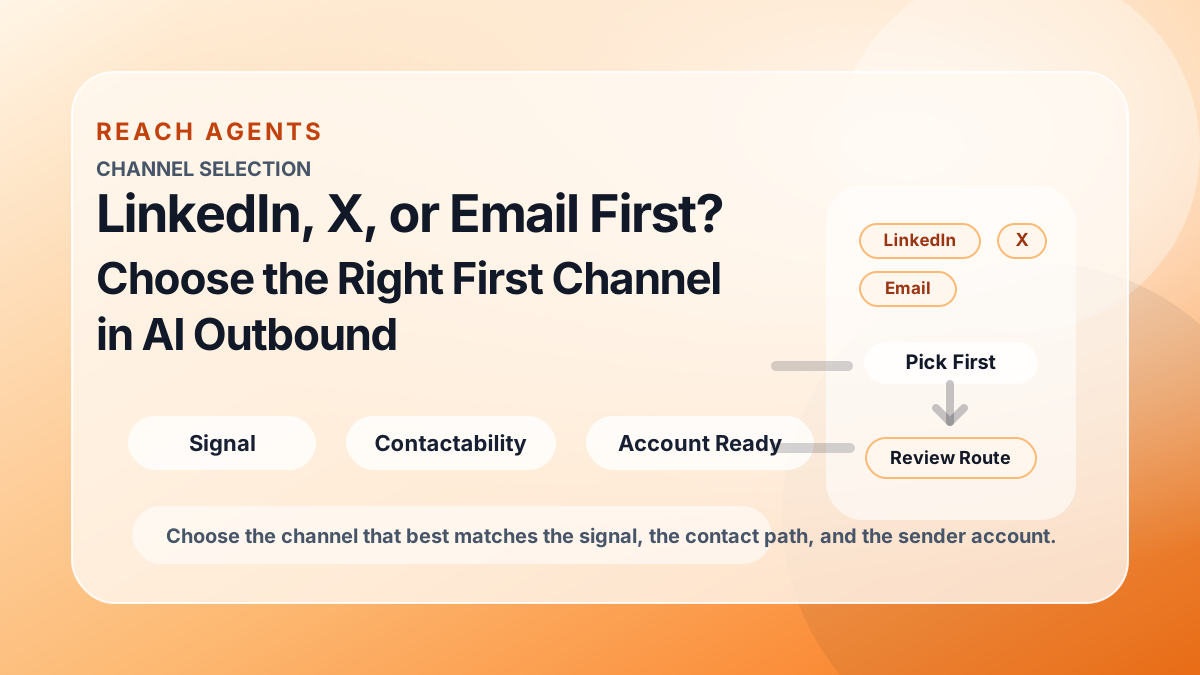
That usually underperforms because channel order should not be fixed. It should depend on the buyer signal, the contactability of the prospect, the readiness of the sender account, and the amount of judgment the team still wants before a message goes out.
The best first channel is not the one your team likes most. It is the one that makes the outreach feel most earned with the least operational risk.
1. Why fixed channel order underperforms in modern outbound
Fixed sequence logic sounds efficient because it is easy to repeat.
It is also why many outbound systems feel generic.
A buyer who just posted on LinkedIn about hiring SDRs should not always receive the same first touch as a buyer with no public activity but a verified work email. A founder active on X is not the same as a finance leader who rarely posts anywhere and responds better to a direct business email. A strong social signal does not always mean social should go first, and a valid email does not always mean email deserves the opening move.
Channel order works better when it answers three separate questions:
- Why is this buyer relevant now?
- Which channel best matches that evidence?
- Which sender account can handle the next step safely if the buyer responds?
If you skip those questions, the team ends up using multi-channel outbound as volume padding instead of decision quality.
That is also why this article sits after the existing Reach Agents cluster on ICP rules, signal-based outbound, and social-signal outreach. Those posts explain who to target and what evidence matters. The next step is deciding which channel should move first.
2. The three filters to check before outreach: buyer signal, contactability, account readiness
Before you choose LinkedIn, X, or email, check three filters.
Buyer signal
This is the reason-to-message.
Ask:
- What happened that makes now a reasonable time to reach out?
- Is the signal public, recent, and relevant?
- Does the signal naturally belong in a professional message, a social message, or a longer email?
If the signal is weak, channel choice will not save the campaign. Tighten the signal first.
Contactability
This is the practical question of whether the channel can carry the message well.
Ask:
- Do we have a verified work email?
- Is the buyer active enough on LinkedIn or X for a message there to make sense?
- Does the message need one sentence, two short paragraphs, or a fuller explanation?
A channel can be valid in theory and still be weak in practice if the contact path is incomplete.
Account readiness
This is the governance layer.
Ask:
- Which connected account would send the first touch?
- Does that sender identity fit the campaign?
- Who reviews the draft before send?
- Who owns replies if the buyer answers there?
This is where connected accounts, approval rules, and reply routing all matter together.
If any one of these three filters is weak, do not force the channel just because it is part of the planned sequence.
3. When LinkedIn should go first
LinkedIn is usually the best first channel when the signal is professional, role-based, and easier to acknowledge in a short business message than in a full email.
LinkedIn should often go first when:
- the reason-to-message comes from role context, hiring activity, or a professional workflow change
- the buyer is senior enough that a softer first touch feels more natural than a direct email
- the sender identity matters, such as founder-to-founder or operator-to-operator outreach
- the team does not yet have a strong verified email path but does have a clear professional fit
- the first step is meant to start a conversation, not push for a big CTA immediately
Example:
A VP of Sales is hiring SDRs and the sender is a founder selling an outbound workflow product. LinkedIn is often the better first touch because the context is professional, current, and identity-driven.
LinkedIn is usually a weaker first choice when:
- the message is generic enough that it could have been sent to anyone
- the sender profile does not match the campaign context
- nobody clearly owns follow-up if the buyer responds
- the team really wants to explain a more detailed business case than a short message can carry
If the team is using social context, keep the message specific but restrained. The goal is to acknowledge the signal, not prove the system scraped every detail from the profile.
4. When X should go first
X should usually go first only when the signal is genuinely social and recent.
This is where many teams get it wrong. They see that a buyer has an X account and treat that as enough reason to use it. It is not.
X is strongest when:
- the buyer recently posted, replied, or shared something that creates a real opening
- the audience is founder-heavy, builder-heavy, or highly active in public conversations
- the reason-to-message is tied to something timely and conversational
- the best first touch is short, fast, and anchored in public context
- the team can actually monitor and respond quickly if the buyer engages there
Example:
A founder posts about pipeline quality or outbound experimentation. X can be the best first move because the conversation is already happening in public and the outreach can feel like a natural continuation instead of a cold interruption.
X is usually a poor first choice when:
- the signal is old or weak
- the buyer is barely active there
- the message depends on too much context to fit cleanly
- the sender account is not actively monitored
- the outreach would look opportunistic instead of relevant
A useful rule is simple:
Use X when the signal lives on X and the timing still matters.
If the real evidence lives elsewhere, choose a different channel.
5. When email should go first
Email should go first when the buyer fit is clear, the team has a strong verified contact path, and the message benefits from a little more room.
Email is often the best first channel when:
- a verified work email exists and belongs to the right person
- the business reason is clear even without a fresh public social trigger
- the message needs more context than a social first touch should carry
- the CTA is more direct and the team wants clearer reply ownership
- the team needs better continuity for objections, referrals, or scheduling replies
Example:
The account fits the ICP, the buyer owns the workflow, and the message needs to explain a concrete problem the team can help solve. Email is often the right first touch because it gives enough room for context without leaning on a public post or social cue.
Email should usually not go first when:
- there is no verified email or the sender domain is not ready
- the social signal is much stronger than the email reason
- the message would feel overly cold without acknowledging a visible context first
- the team has not sorted out who owns the inbox and the follow-up path
This is especially important for teams trying to scale too fast. If email infrastructure is the weakest part of the workflow, pushing email first can turn an otherwise good campaign into a deliverability problem. That is why deliverability readiness and channel choice should be evaluated together.
6. How to branch the sequence after no response, soft engagement, or partial intent
Choosing the first channel is only half the job. The next step should also depend on what happened.
No response
No response does not mean every other channel should fire immediately.
A better question is: what changed after the first touch?
- If LinkedIn was first and the buyer never engaged, email may be the next step if the work email is verified and the business case is strong enough for a more direct message.
- If X was first and the buyer did not respond, LinkedIn or email may be better if the public signal was real but the social channel was too lightweight.
- If email was first and there was no reply, switch only if another channel has a stronger context than the original email did.
The point of the next step is not to prove persistence. It is to improve fit.
Soft engagement
Soft engagement means the buyer noticed the outreach but did not commit yet.
Examples include:
- a LinkedIn connection acceptance without a reply
- a short X interaction without clear buying intent
- a partial response that confirms relevance but not urgency
In those cases, the next move should stay small. A lightweight follow-up in the same channel or a short move into email can work, but only if the reason feels cumulative rather than repetitive.
Partial intent
If the buyer shows some interest but the next step requires judgment, escalate early.
That includes:
- vague curiosity
- mixed signals
- referral hints
- product or pricing questions
- signs that a different person should own the conversation
This is where a rigid sequence should stop and a human should decide the next branch.
7. Approval rules and sender ownership by channel
The safest channel is often the one your team can actually govern.
Before launch, define four things clearly:
- sender owner: who is responsible for the connected account
- campaign owner: who decides which audience and channels are allowed
- review owner: who approves the first sends or sensitive messages
- reply owner: who takes the conversation once a buyer responds
Those roles matter because channel choice is not just a messaging decision. It is also an ownership decision.
A few practical approval rules help a lot:
- review every new account-and-channel combination before first send
- review any message that uses a public signal from LinkedIn or X
- review high-value accounts even if the draft itself looks safe
- route pricing, objection, and referral replies to a human owner instead of auto-branching
- pause sends when the signal, sender fit, or account readiness becomes uncertain
If the team cannot explain who would handle a positive reply on that channel, that channel is not ready to go first.
8. A simple signal-to-channel decision matrix teams can actually use
The easiest way to operationalize channel choice is to map the signal, contact path, and sender readiness together.
| Situation | Best first channel | Why |
|---|---|---|
| Fresh professional signal, role-based fit, strong sender identity | Best for concise professional context and identity-led outreach | |
| Fresh public conversation on X, founder or builder audience, fast social context | X | Best when the signal lives in public and timing matters right now |
| Verified work email, clear business problem, message needs more room | Best for direct business context, stronger CTAs, and structured replies | |
| No verified email, but strong professional fit and relevant role context | Better than forcing email-first with a weak contact path | |
| Weak social signal, strong ICP fit, clear operational pain | Better to lead with the business case than a weak social reference | |
| Social signal exists, but sender account is not ready or not monitored | Email or pause | Governance matters more than novelty |
| Mixed signals, strategic account, or high-risk context | Human review before choosing | The decision itself is part of the approval workflow |
A good first rollout in Reach Agents can stay simple:
- define the ICP and exclusion rules
- pick one strong signal type
- choose the first channel based on the three filters above
- connect only the sender accounts that are ready for review and reply ownership
- launch a small approved batch
- use real replies to refine the next channel decision
That is how multi-channel outbound becomes a decision system instead of a pile of touches.
Start free: connect LinkedIn or X, define your ICP, and let Reach Agents build the first buyer list for approval at app.reachagents.ai.
Table of Contents
Ready to build your outbound workflow?
Book a walkthrough
Start using Reach Agents for free
Log in at app.reachagents.ai to connect your accounts and start launching outbound workflows.
Start free