AI Outbound Reply Routing: How to Triage Replies and Hand Off Prospects Across LinkedIn, X, and Email
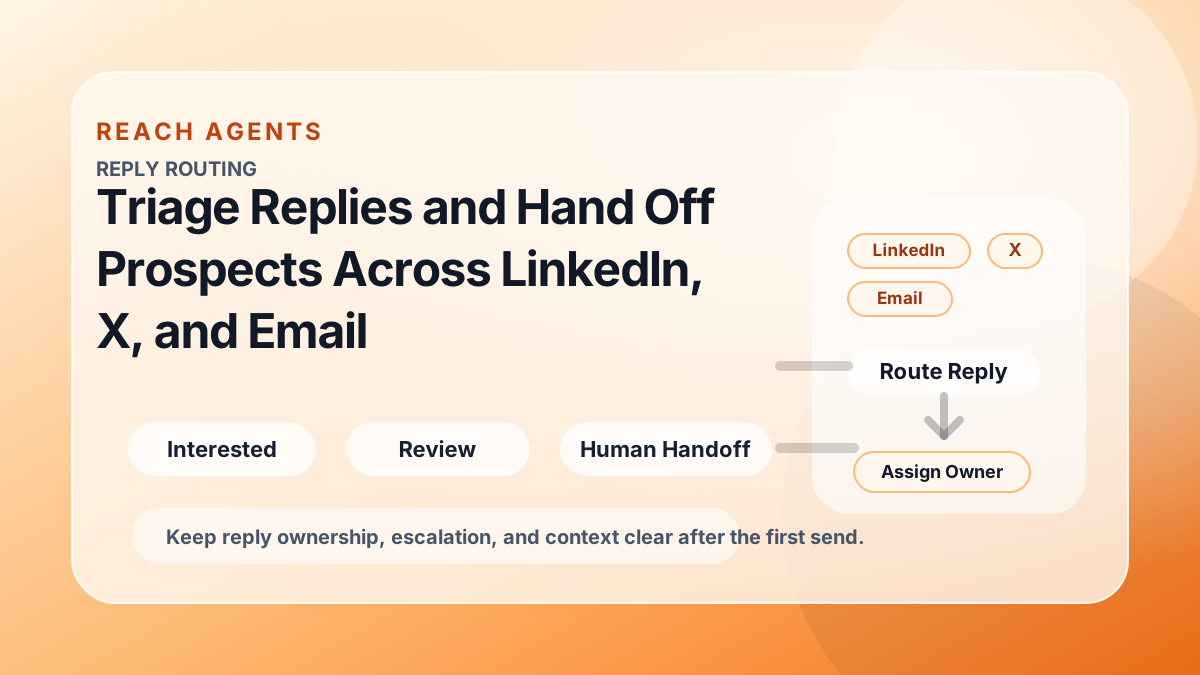
Most outbound teams spend too much time optimizing the message before send and not enough time designing what happens after the buyer replies.
That is backwards.
Once campaigns are live, reply handling becomes the real operating bottleneck. A good first touch can still turn into a missed opportunity if interested replies sit too long, objections go to the wrong person, or a referral gets lost between LinkedIn, X, and email.
This is where reply routing matters.
The goal is not to automate every response. The goal is to make sure every reply is recognized quickly, tagged correctly, assigned clearly, and escalated to a human when judgment matters.
For teams running AI outbound across multiple channels, the safest workflow is simple:
- let AI do the repetitive classification work
- keep routing rules explicit
- keep ownership visible
- keep humans in control of high-risk replies
That is how you move faster without creating conversation chaos.
1. Why reply handling becomes the real bottleneck after launch
Before launch, the team usually focuses on list quality, signals, drafts, approvals, and send readiness.
After launch, the bottleneck shifts.
Now the hard questions are operational:
- Who sees the reply first?
- Who owns the next step?
- Which replies can move automatically?
- Which ones need a human now?
- How do you preserve context from the original outreach?
If those rules are vague, multi-channel outreach starts leaking value fast.
A prospect replies on LinkedIn, but the account owner does not notice. A warm email reply gets treated like generic inbox noise. An X response references the original signal, but the handoff loses that context before a salesperson steps in. The campaign keeps sending, but the team is slow where it matters most.
That is why reply routing should be treated as part of the outbound system design, not as cleanup after send.
It also connects directly to the rest of the ReachAgents blog cluster:
- approval workflows protect what goes out
- connected account setup protects who sends and who owns each channel
- multi-channel workflow design protects campaign coordination
Reply routing is the layer that keeps all of that useful once prospects start talking back.
2. The reply buckets that matter most
Not every reply deserves the same speed, owner, or approval path.
A practical routing model starts by grouping replies into a few operational buckets.
| Reply type | What it usually means | Default next step |
|---|---|---|
| Interested | The buyer wants more detail, a meeting, or a clear next action | Route quickly to the meeting owner or seller with full context |
| Objection | The buyer is pushing back on fit, timing, budget, or relevance | Route to a human who can judge whether to clarify, pause, or disqualify |
| Referral | The contact says someone else owns the problem | Tag the referral, preserve the original thread context, and queue a follow-up path |
| Out of office | The contact is unavailable for a defined period | Pause follow-up until the return date and keep ownership attached |
| Unsubscribe or stop | The contact does not want more outreach | Suppress immediately across the relevant channel or workspace rules |
| Wrong person | The contact is not the right owner but may hint at the right one | Route for qualification instead of treating it as a dead end |
| Bounce or technical failure | The message did not reach a live inbox | Flag for sender/list review, not rep follow-up |
| Ambiguous | The reply is short, unclear, or mixed-signal | Hold for human review instead of guessing intent |
This structure matters because it turns inbox noise into workflow decisions.
Without buckets, teams treat replies as one queue and create two bad outcomes:
- hot replies wait too long
- edge cases get handled too casually
A routing system should reduce both.
3. Routing rules by channel, sender, and account owner
A strong reply-routing workflow does not route only by reply text. It also routes by channel context and by who the sender account belongs to.
That is especially important in multi-channel outbound because the same buyer might answer differently depending on where the conversation started.
Route by channel
Each channel tends to create a different reply shape:
- LinkedIn replies are often shorter and relationship-sensitive
- X replies are often signal-driven and context-light unless the original trigger is preserved
- Email replies often include longer questions, objections, scheduling intent, or referrals
That means the routing rule should account for the communication style of the channel, not just the sentiment of the response.
Route by sender identity
The human behind the account matters too.
A founder-sent message may need founder visibility on important replies. An SDR-owned mailbox may route interested replies to an AE or meeting owner. A company account may need stricter escalation rules because tone and authority are broader.
This is why connected accounts are not just integrations. They define who should stay in the loop when a conversation becomes real.
Route by campaign ownership
The campaign owner should be able to answer, before launch:
- who owns interested replies
- who owns objections
- who owns product or pricing questions
- who owns pause decisions when reply quality drops
- who owns referral follow-up if a better contact is named
If those owners are not explicit, the workflow is not ready.
A good routing rule is usually a combination like this:
If a reply is interested, from a high-fit account, and sent from a founder or strategic sender identity, route to the assigned sales owner immediately and preserve the original context.
That is the kind of rule a team can actually operate.
4. What AI can auto-tag vs what should wait for human review
AI is useful in reply handling when it removes repetitive sorting work without pretending to replace judgment.
Good candidates for automation
These actions are usually safe to automate first:
- classify straightforward reply intent
- tag channel and sender context
- detect unsubscribe or stop language
- mark out-of-office replies and extract return timing when obvious
- detect obvious bounces or delivery failures
- group similar low-risk replies for review queues
- attach the original outreach context, account owner, and campaign name to the thread
These steps help the team move faster because they reduce triage overhead.
Good candidates for human review
These cases usually need a human before the next message goes out:
- product-fit questions
- pricing questions
- nuanced objections
- ambiguous replies with mixed positive and negative intent
- senior-buyer responses
- sensitive accounts or brand-risk scenarios
- referrals where the team needs to decide whether and how to pursue the new contact
The key principle is simple: automate confidence, escalate ambiguity.
That is the same logic behind approval-first outbound. The system should handle repetitive sorting automatically, but it should not improvise where buyer intent is unclear or the downside of a bad reply is high.
5. How to hand off interested replies without losing context or speed
The handoff itself is where many teams break the workflow.
An interested prospect does not only need a fast reply. They need the next human to understand the conversation immediately.
A good handoff should preserve at least five things:
- the original outreach message
- the reason-to-message or signal behind the outreach
- the channel the buyer replied on
- the sender identity that started the thread
- the exact buyer reply and the proposed next owner
Without that context, the human stepping in has to reconstruct the thread manually. That wastes time and often produces awkward follow-ups.
A better model is:
- AI tags the reply as interested
- the workflow attaches the relevant campaign and sender context
- the reply owner receives the conversation with the next recommended action
- the team can still review before sending a high-stakes follow-up if needed
That is what keeps multi-channel handoff from turning into swivel-chair work.
The goal is not only faster response speed. It is cleaner continuity from first touch to live conversation.
6. How to handle referrals, OOO replies, unsubscribes, and dead-end replies cleanly
A good routing workflow does not only optimize the happy path. It also keeps operational edge cases clean.
Referrals
A referral is not just a positive reply. It is a routing event.
If a contact says, “Talk to our VP of Sales instead,” the system should preserve:
- who made the referral
- who they referred
- what problem context was already established
- which channel the referral came through
That prevents the new outreach from feeling disconnected or repetitive.
Out-of-office replies
OOO replies should not stay in the same queue as active objections or warm interest.
A clean workflow should:
- tag the reply as temporary unavailability
- pause the follow-up path until the return date if one exists
- keep ownership attached so the thread reappears for the right person later
Unsubscribes and stop requests
These should be handled immediately and conservatively.
Do not treat them as normal reply-management work. Treat them as suppression events.
The system should make it easy to:
- stop future sends on the relevant channel
- update suppression or exclusion logic where appropriate
- preserve a clear audit trail of why sending stopped
Wrong person and dead-end replies
Not every “wrong person” reply is useless.
Sometimes it is a soft referral. Sometimes it is a signal that the targeting rule needs to improve. Sometimes it is a real dead end.
That is why these replies should feed back into the targeting system, not only the inbox queue. They can improve future ICP rules and help the team stop wasting sends on similar contacts.
7. SLAs and metrics that actually matter for reply routing
If reply routing matters, the team should measure it directly.
A few operational metrics are more useful than vanity activity metrics here:
- time to first human review for high-priority replies
- time to first response for interested prospects
- handoff completion rate
- misrouted reply rate
- percentage of ambiguous replies escalated correctly
- meeting conversion from interested replies
- suppression speed for stop or unsubscribe requests
These metrics show whether the routing workflow is protecting pipeline quality and response quality.
They also create a useful feedback loop:
- if response speed is slow, ownership may be unclear
- if misroutes are high, reply buckets may be too vague
- if interested replies are not converting, the handoff may be losing context
- if suppression is slow, compliance and brand risk increase
This is where reply routing becomes an operating system issue, not an inbox preference.
8. How ReachAgents helps teams route replies across LinkedIn, X, and email
ReachAgents is strongest when teams want one workflow across connected channels without giving up human control.
That matters after launch because reply operations are where disconnected tools start to hurt most.
A practical ReachAgents-style setup helps teams:
- connect LinkedIn, X, and email in one workflow
- keep sender identity and campaign ownership visible
- tag replies by intent and route them to the right owner
- escalate judgment-heavy replies for human review
- keep connected-account context attached to the conversation
- use reply outcomes to improve targeting, approvals, and channel rules over time
That is what a human-in-the-loop outbound workflow should do. It should not just create more messages. It should make the next best action clearer after a prospect responds.
If the earlier part of the campaign still needs work, the deliverability guide and launch checklist are the right companions. But once replies start arriving, routing quality becomes one of the clearest indicators of whether the whole system is actually operational.
Better reply routing keeps pipeline from leaking after send
The value of AI outbound is not only in drafting or sending faster. It is in making sure the right human steps in at the right moment with the right context.
That is what reply routing protects.
When reply buckets are clear, ownership is explicit, and ambiguous cases get human review, teams can move quickly without dropping hot prospects or mishandling sensitive conversations.
Start free: connect LinkedIn, X, or email, define approval and routing rules, and let ReachAgents help your team manage the first live reply workflow at app.reachagents.ai.
Table of Contents
Ready to build your outbound workflow?
Book a walkthrough
Start using Reach Agents for free
Log in at app.reachagents.ai to connect your accounts and start launching outbound workflows.
Start free